When comparing a Laser Level with manual leveling versus automatic (self-leveling) technology, the answer is straightforward: automatic laser levels are faster, more accurate, and easier to use, while manual laser levels are more affordable and rely on user adjustment. However, the real differences go much deeper—affecting efficiency, precision, cost, and suitability for different applications. This article provides a comprehensive, in-depth comparison to help you make the right decision.
A Laser Level is a precision measurement tool that projects a beam of light to establish a horizontal or vertical reference line. These tools are widely used in construction, interior decoration, mechanical installation, and even landscaping. Compared to traditional leveling tools like spirit levels or plumb lines, laser levels significantly improve efficiency, reduce human error, and allow long-distance alignment.
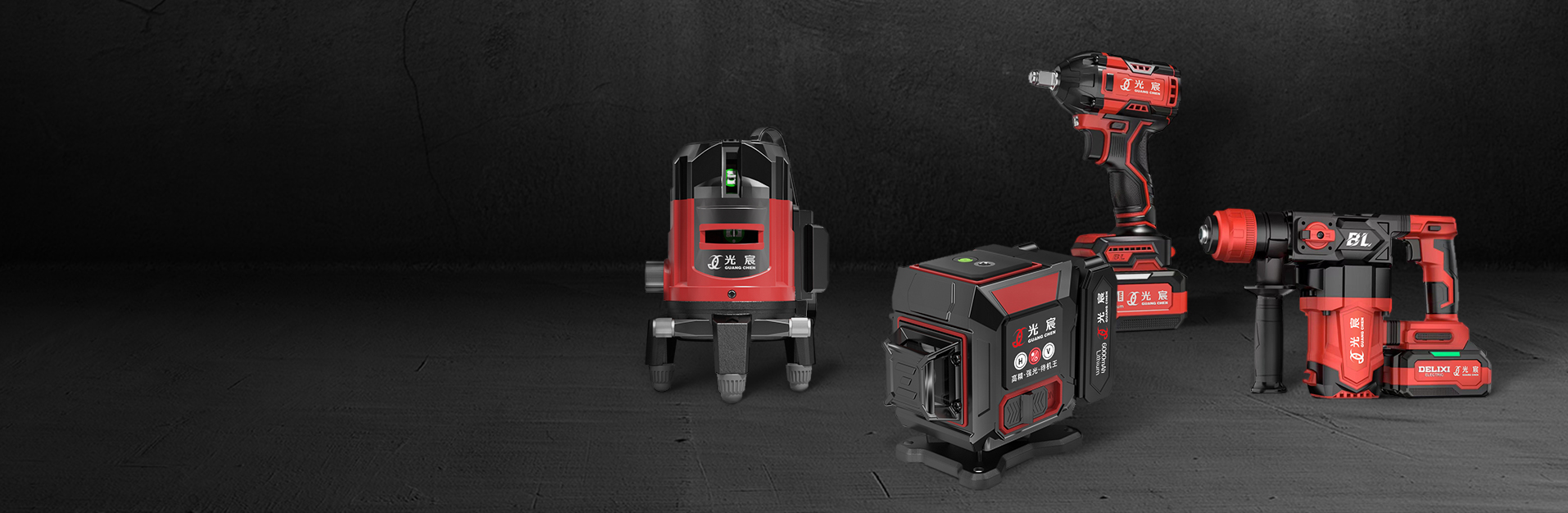
There are several types of Laser Level devices available today, including line laser levels, rotary laser levels, dot laser levels, and cross-line laser levels. However, regardless of type, they generally fall into two categories based on leveling method: manual leveling and automatic (self-leveling).
A manual Laser Level requires the user to physically adjust the device until it is level. This is usually done using built-in bubble vials (spirit levels). The user must carefully align the tool by adjusting its base or tripod until the bubble is centered.
The operator adjusts the Laser Level manually by turning knobs or repositioning the device until the bubble vial indicates a level position. Once aligned, the laser beam projects a straight line. Any slight misalignment can affect accuracy, making user skill critical.
An automatic Laser Level, also known as a self-leveling laser level, uses advanced internal mechanisms such as pendulum systems or electronic sensors to automatically achieve level alignment. As long as the device is placed within its self-leveling range, it adjusts itself without manual intervention.
The internal pendulum or electronic system automatically adjusts the laser beam to achieve a level position. If the Laser Level is placed outside its leveling range, it typically flashes or emits a warning signal to alert the user.
| Parameter | Manual Laser Level | Automatic Laser Level |
| Leveling Method | Manual adjustment | Self-leveling system |
| Accuracy | Moderate (user-dependent) | High precision |
| Setup Time | Longer | Very fast |
| Ease of Use | Requires experience | Beginner-friendly |
| Cost | Lower | Higher |
| Durability | High (simple design) | Sensitive to impact |
| Applications | Small projects | Professional tasks |
Different Laser Level types are suited for different scenarios:
Yes, especially for professionals, as it improves efficiency and accuracy significantly.
It can, but only with careful adjustment and experience.
With proper care, a Laser Level can last several years.
In conclusion, both manual and automatic Laser Level tools have their advantages. Manual models are suitable for basic tasks and budget users, while automatic models provide superior performance for professional and high-precision applications. Choosing the right tool depends on your specific requirements, but for most modern applications, automatic laser levels offer unmatched convenience and accuracy.
Copyright 2023 Jiangsu Guangchen Electronic Technology Co., Ltd. All Rights Reserved
China Lithium Power Tools Supplier

English
русский
Español
عربى