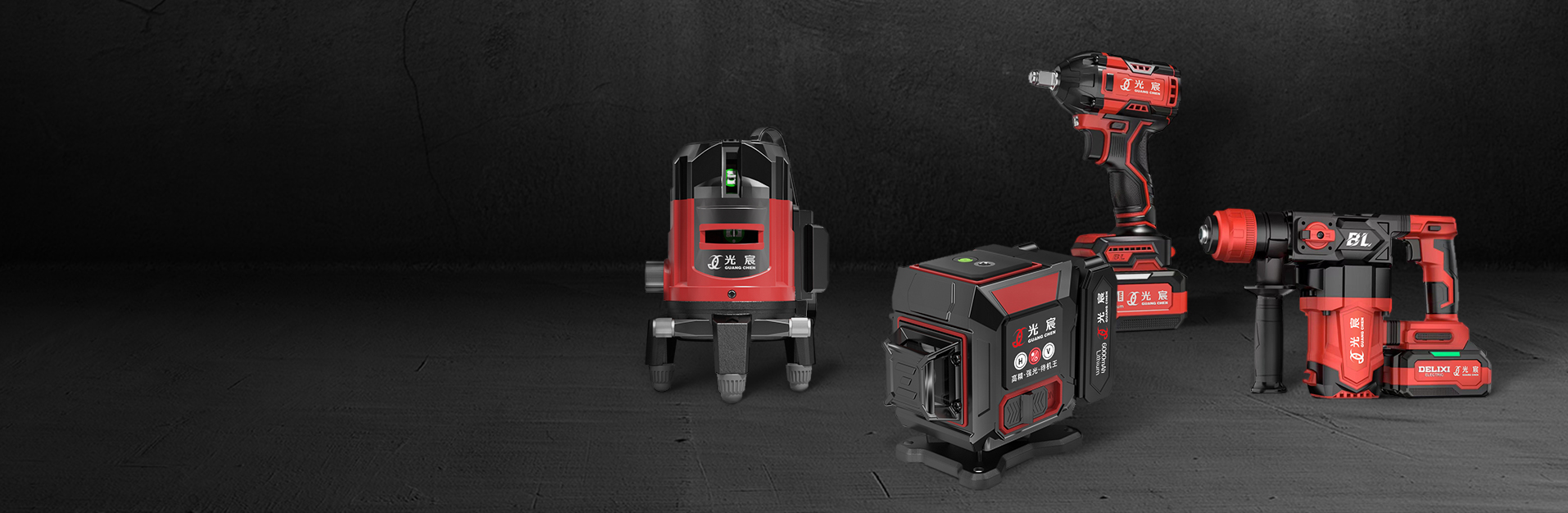
Quick Answer: After extended use, a laser level most commonly suffers from calibration drift, fading laser beam output, battery and charging failures, moisture or dust ingress, damaged pendulum mechanisms, and wear on the leveling bubble. These issues reduce accuracy, shorten the tool's operational life, and can lead to costly rework if left unaddressed.
A laser level is one of the most relied-upon precision instruments on any construction, renovation, or surveying job. Whether you use a cross-line, rotary, or multi-line laser level, the tool must maintain extreme accuracy over hundreds—sometimes thousands—of hours of field operation. Over time, however, even the most robust laser level begins to show signs of wear. Understanding which problems are most likely to develop, why they occur, and how to address them is essential for professionals and DIY users alike.
This guide covers every major failure mode in detail, offers comparison tables so you can assess severity, and closes with a thorough FAQ section. By the end, you'll know exactly what to watch for and how to extend the service life of your laser level significantly.
Content
Calibration drift is widely considered the most serious issue a laser level develops over time. It refers to the gradual deviation of the laser beam from a true horizontal or vertical plane, even when the instrument appears to be properly set up. A laser level with calibration drift may still power on, project a bright beam, and self-level correctly — yet deliver measurements that are off by fractions of a degree, leading to visually invisible but structurally significant errors.
The standard field test for horizontal accuracy is the "wall test": set up your laser level 5 meters from a wall, mark the beam position, rotate the unit 180°, and re-mark. Any discrepancy divided by two equals the actual error. For a professional laser level, acceptable horizontal accuracy at 10 m is typically ±1.5 mm to ±3 mm. Anything beyond that indicates drift requiring recalibration.
Calibration Error Severity Guide
| Error at 10 m | Severity | Recommended Action |
| ≤ 1.5 mm | Within spec | Continue normal use |
| 1.5 – 3 mm | Marginal | Schedule recalibration |
| 3 – 6 mm | Significant drift | Recalibrate immediately |
| > 6 mm | Critical failure | Return for factory service |
The laser diode is the heart of any laser level. Like all semiconductor light sources, laser diodes have a finite operational lifespan, typically rated at 5,000–10,000 hours for quality instruments. After extended use, the output power of the diode decreases progressively — a phenomenon known as lumen depreciation or optical degradation.
The practical consequence is a beam that becomes increasingly difficult to see, especially outdoors or in brightly lit environments. Users often compensate by working closer to the surface or reducing ambient lighting — workarounds that reduce productivity and introduce new sources of error.
Most modern laser level models use an internal self-leveling pendulum — a gravity-responsive compensator that automatically aligns the beam to true level within a set working range (commonly ±4° or ±5°). This mechanism is elegant but surprisingly vulnerable to long-term mechanical wear.
Power system reliability is one of the most frequently reported long-term complaints among laser level users. Both alkaline battery compartments and integrated lithium-ion rechargeable systems develop problems that affect runtime, beam stability, and overall reliability.
Battery Type Comparison: Long-Term Performance
| Battery Type | Avg. Lifespan | Long-Term Issues | Cold Weather Performance |
| Alkaline AA/AAA | 1–2 years stored | Leakage corrodes contacts | Poor (voltage drop) |
| NiMH Rechargeable | 500–800 cycles | Memory effect, capacity fade | Moderate |
| Li-ion Integrated | 300–500 cycles | Permanent capacity loss after ~3 yrs | Good (above −10°C) |
| Li-ion Pack (tool) | 500–1000 cycles | Cell imbalance, BMS failure | Good (above −20°C) |
Alkaline batteries left in a laser level for extended periods — especially in humid storage — frequently leak potassium hydroxide electrolyte. This caustic substance corrodes the spring contacts and terminal plates inside the battery compartment, causing intermittent connectivity or complete power failure. Cleaning corroded contacts with isopropyl alcohol and a fiberglass pen can restore function in mild cases, but severe corrosion often requires component replacement.
Even a laser level rated IP54 or IP65 is not immune to long-term environmental degradation. The IP rating describes ingress protection at the time of manufacture — but seals, gaskets, and O-rings age. After 2–4 years of regular field use, rubber seals harden and crack, allowing moisture and fine particulates to enter the housing.
IP Rating Long-Term Seal Durability
| IP Rating | Initial Protection | Seal Life (Heavy Use) | Typical Failure Mode |
| IP40 | Dust (no liquid) | 1–2 years | Internal dust accumulation |
| IP54 | Splash resistant | 2–3 years | Gasket hardening, fogging |
| IP65/IP67 | Dust-tight, water jets | 3–5 years | O-ring fatigue, UV seal degradation |
Many laser level units include auxiliary bubble vials that allow users to perform a quick visual pre-check before relying on the electronic self-leveling system. These vials are precision-ground glass tubes filled with ethanol or similar fluid, and they degrade in distinct ways:
The standard 5/8"-11 UNC tripod mounting thread on the bottom of a laser level undergoes mechanical stress every single time the tool is mounted or dismounted. After hundreds of connection cycles, thread wear causes:
Modern laser level designs incorporate electronic tilt sensors, microcontrollers, and sometimes wireless modules. These electronic systems develop age-related faults that are often misdiagnosed as mechanical problems:
The good news is that most long-term problems with a laser level are preventable or at least significantly delayable with a disciplined maintenance routine. The following practices are recommended by service technicians who work on professional-grade instruments.
Recommended Laser Level Maintenance Schedule
| Task | Frequency | Benefit |
| Calibration wall test | Monthly | Catches drift early |
| Clean external optics with lens tissue | Weekly | Maintains beam quality |
| Inspect and lubricate tripod thread | Quarterly | Prevents seizure and wear |
| Remove batteries for storage > 2 weeks | Always | Prevents leakage corrosion |
| Inspect seals and housing for cracks | Semi-annually | Prevents moisture ingress |
| Professional factory calibration | Annually | Restores full accuracy spec |
When a laser level develops serious long-term problems, users face a key decision: invest in professional repair or replace the unit. The following framework helps clarify the choice.
| Problem Type | Typical Repair Cost | Recommendation |
| Minor calibration drift | Low | Recalibrate — always worth it |
| Battery contact corrosion | Very low | Clean/replace contacts |
| Pendulum damping failure | Moderate | Repair if tool is <3 years old |
| Laser diode replacement | Moderate–High | Repair if cost <50% of new unit |
| PCB/sensor replacement | High | Replace the unit |
Q: How do I know if my laser level has lost calibration?
Perform the wall test: project the beam onto a wall at 5 m, mark the point, rotate the unit 180°, and re-mark. If the two marks differ by more than 3 mm, your laser level has drifted out of calibration and requires professional adjustment.
Q: How long should a laser level last with regular professional use?
A well-maintained professional-grade laser level should provide 5–8 years of regular use before requiring major service. Consumer-grade units typically last 2–4 years under similar conditions. Annual calibration checks and proper storage significantly extend service life.
Q: Can I recalibrate a laser level myself?
Some basic field calibration adjustments are user-serviceable on certain models — typically using set screws accessed through the housing. However, full factory calibration requires specialized optical equipment and temperature-controlled environments. Attempting internal mechanical adjustments without the right tools can permanently worsen accuracy, so factory service is strongly recommended for any drift beyond field-adjustable limits.
Q: Why does my laser level beam look dim even with fresh batteries?
Beam dimness with fresh batteries most commonly indicates laser diode degradation, dust or condensation on the internal lens, or a dirty external window. Begin by gently cleaning the output window with a lens cloth. If the beam remains dim, the diode output has likely decreased to end-of-life levels and professional service is required.
Q: My laser level takes a long time to self-level or never settles — what is wrong?
Slow or incomplete self-leveling indicates a problem with the pendulum damping system — most likely evaporation of damping fluid, pivot wear, or a partially engaged transport lock. Verify first that the transport lock is fully disengaged. If the problem persists, the unit requires internal service to restore the damping mechanism.
Q: Is it safe to use a laser level outdoors in rain?
Only if the unit is specifically rated for rain exposure (IP65 or higher) and the seals are in good condition. Aging seals on older units may no longer provide their original rated protection. After rain exposure, always dry the exterior thoroughly before storage, and inspect the housing for any water ingress at cable ports or battery doors.
Q: How should I transport a laser level to minimize long-term damage?
Always engage the pendulum lock before transport, use the original padded case or a foam-lined hard case, and avoid placing the case where it can slide or be compressed by other equipment. For vehicle transport, secure the case so it cannot shift during braking or cornering. These precautions significantly reduce the rate of calibration drift and pendulum wear over time.
A laser level is a precision instrument, and like all precision instruments, it requires proactive care to maintain the accuracy your work depends on. The most common long-term problems — calibration drift, diode degradation, pendulum failure, battery corrosion, moisture ingress, and electronic faults — follow predictable patterns and respond well to early intervention.
The key principle is this: a laser level that appears to work correctly is not necessarily providing accurate results. Regular calibration checks, disciplined storage habits, and scheduled professional service are the three pillars of a long, reliable service life for any laser level.
By understanding the failure modes described in this guide, you can detect problems early, make informed repair-or-replace decisions, and protect the integrity of every project that depends on your laser level's accuracy.
Copyright 2023 Jiangsu Guangchen Electronic Technology Co., Ltd. All Rights Reserved
China Lithium Power Tools Supplier


 English
 русский
 Español
 عربى
عربى