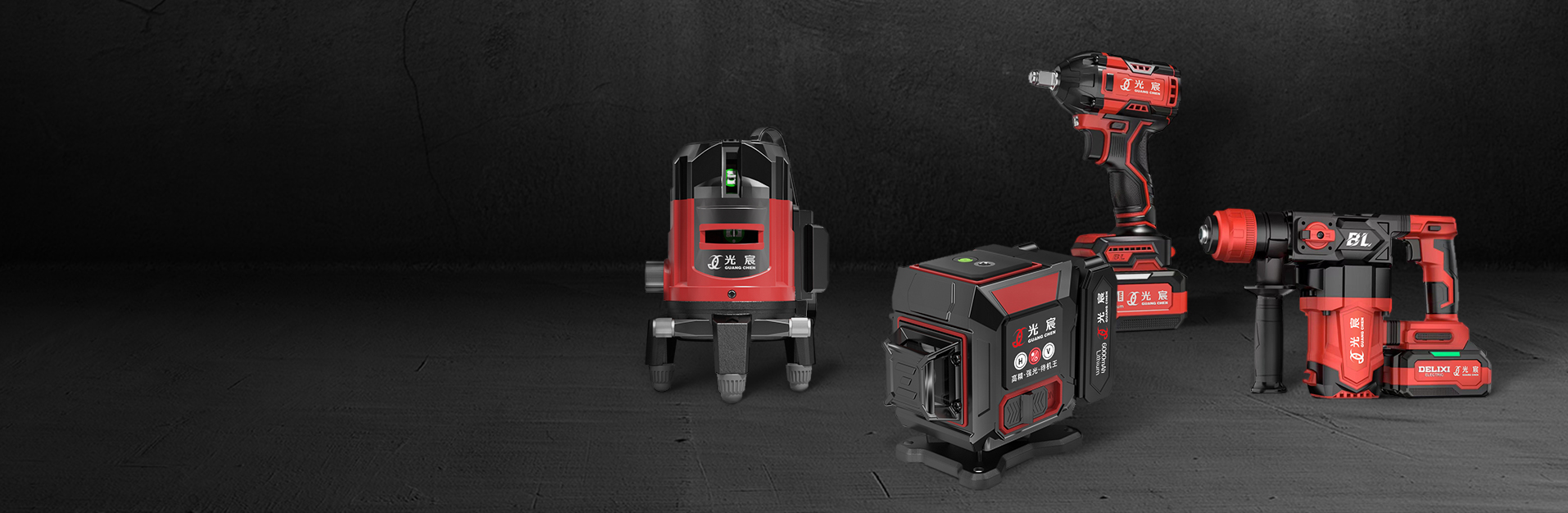
The Laser Level has become an essential tool in construction, interior decoration, surveying, and DIY home improvement. Whether aligning tiles, installing cabinets, or ensuring precise layout lines, laser technology has significantly improved accuracy and efficiency. One of the most discussed topics among professionals and consumers is the difference between red and green laser beams.
Although both types serve the same fundamental purpose, their performance, visibility, energy consumption, and cost vary considerably. Understanding these differences helps users select the most suitable Laser Level for specific working conditions and project requirements.
A Laser Level is a precision measuring instrument that projects a visible laser beam to create straight reference lines or points. These projected lines act as guides for horizontal, vertical, or cross-level alignment. Laser levels are widely used in:
Modern laser levels are typically classified by beam color, with red laser levels and green laser levels being the two dominant options on the market.
The color of a Laser Level directly affects beam visibility, working distance, energy efficiency, and suitability for different environments. Human vision responds differently to various wavelengths of light, which is why green and red lasers perform differently even at similar power outputs.
The human eye is most sensitive to light in the green wavelength range (around 520–550 nm). Red lasers typically operate at around 635–650 nm, which appears less bright to the eye under the same power conditions.
This physiological difference explains why green laser lines often appear sharper and more vivid than red ones, especially in bright environments.
Red Laser Level models have been used for decades and remain popular due to their simplicity and affordability. Common characteristics include:
Red laser beams are clearly visible in indoor environments with controlled lighting. However, under strong ambient light or outdoor conditions, visibility drops significantly without a laser detector.
Green Laser Level models represent a newer generation of laser technology. They are designed to improve visibility and working efficiency, particularly in challenging environments.
Green laser beams are significantly brighter to the human eye, making them easier to see in daylight, large rooms, and partially outdoor environments. This enhanced visibility reduces eye strain and improves accuracy.
For indoor projects such as tile alignment, furniture installation, and ceiling layout, both red and green Laser Level models can be effective. Red lasers are often sufficient in low-light rooms, while green lasers provide added clarity in large or well-lit spaces.
Outdoor use presents greater challenges due to sunlight interference. Green laser levels offer better naked-eye visibility, although professional outdoor applications still benefit from laser receivers regardless of color.
Both red and green Laser Level devices are designed to withstand jobsite conditions. However, green laser diodes are generally more sensitive to extreme temperatures. High-quality models compensate with improved thermal management systems.
Advancements in diode efficiency, battery technology, and optical components continue to narrow the gap between red and green Laser Level performance. Rechargeable lithium batteries, improved beam stabilization, and enhanced visibility modes are becoming standard features across both categories.
No. While green laser levels offer superior visibility, red laser levels remain practical, reliable, and cost-effective for many indoor applications.
Green lasers are easier to see outdoors than red lasers, but for long-distance outdoor use, a laser detector is still recommended.
Green laser technology involves more complex components and higher power requirements, which increases manufacturing costs.
Yes. Green lasers consume more energy, resulting in shorter operating times compared to red laser levels.
Many professional models support laser receivers, allowing extended working ranges regardless of beam color.
Both red and green Laser Level options offer unique advantages. Red laser levels remain a practical choice for indoor, cost-sensitive applications, while green laser levels excel in visibility and professional performance. Selecting the right model depends on working environment, project scale, and user expectations for precision and convenience.
Copyright 2023 Jiangsu Guangchen Electronic Technology Co., Ltd. All Rights Reserved
China Lithium Power Tools Supplier

English
русский
Español
عربى