Home / News / Industry news / What are the main types and classification methods of laser levels?
What are the main types and classification methods of laser levels?
Laser levels are essential tools for construction, surveying, and many other precision-required tasks. These devices project a laser beam to provide highly accurate reference points, allowing users to level or align structures with great precision. But with various types of laser levels available on the market, understanding their differences and choosing the right one for your specific needs can be challenging.
A laser level is a tool that uses a laser beam to create a level reference point or line, typically for tasks such as aligning, leveling, and plumbing. Laser levels are used in various applications, including construction, surveying, interior design, and DIY projects.
Types of Laser Levels
Laser levels are categorized based on their features, ranging from basic models to advanced systems designed for professional use. Below are the most common types:
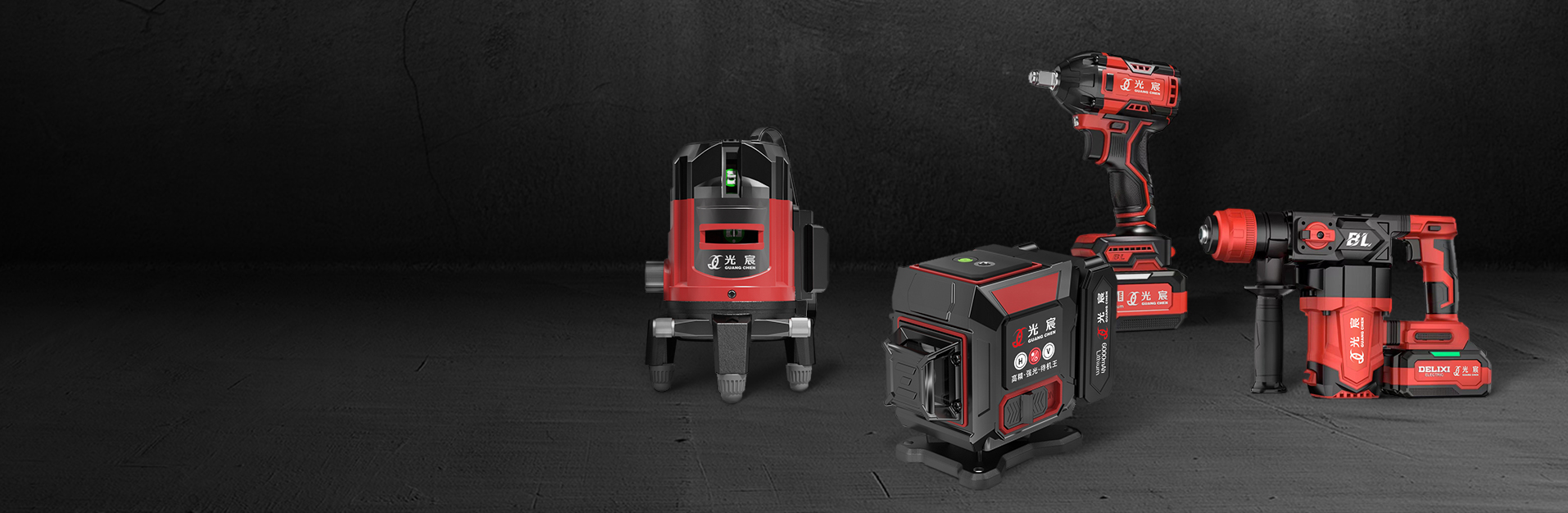
Line Laser Levels: These laser levels project a visible laser beam in a straight line, creating either a horizontal, vertical, or both types of lines. They are ideal for tasks such as hanging pictures, installing shelves, and tiling.
Rotary Laser Levels: Rotary laser levels project a rotating laser beam in a 360-degree pattern. These levels are perfect for large-scale outdoor applications like leveling the ground or aligning walls over long distances. They are typically used by construction professionals.
Dot Laser Levels: This type projects a single laser point, which is useful for tasks that require precise measurements, such as marking specific spots on walls or floors. They are often used for plumbing and other small-scale tasks.
Cross-Line Laser Levels: These tools project both horizontal and vertical lines that intersect to form a cross, making them highly versatile for a wide variety of leveling and alignment tasks. They are commonly used for interior projects like laying tiles or aligning windows.
Laser Distance Meters: While technically not a traditional laser level, a laser distance meter uses laser technology to measure distances accurately. This tool is often used alongside other laser levels for precise measurements in construction and real estate.
Classification of Laser Levels
Laser levels can also be classified based on their functionality, precision, and design. The following are common classifications:
Manual Laser Levels: These laser levels require the user to manually adjust the tool to the correct level. They are generally more affordable but less precise than automated models.
Self-Leveling Laser Levels: These tools automatically level themselves when placed on an uneven surface, offering greater ease of use and accuracy. They are especially useful for professionals who need to ensure perfect leveling every time.
Indoor vs. Outdoor Laser Levels: Some laser levels are designed for use indoors, where visibility is better, while others are made for outdoor use, where visibility can be affected by sunlight. Outdoor laser levels typically come with features like more powerful lasers or built-in detectors to improve accuracy in bright conditions.
Laser Level with Plumb Function: This type of level combines both horizontal and vertical leveling, making it particularly useful for construction tasks that require a plumb line.
Key Features to Consider
When selecting a laser level, it's essential to consider several key factors to ensure that the tool meets your needs:
Accuracy: Precision is the primary factor in choosing a laser level. The higher the accuracy, the more reliable the level is for your tasks.
Range: Consider how far the laser can project. Some models are designed for indoor use with a limited range, while others are suitable for outdoor applications with long-distance coverage.
Battery Life: A laser level's battery life can be an important consideration, especially for extended outdoor projects.
Mounting Options: Many laser levels offer mounting accessories for hands-free use, allowing you to attach the tool to walls, tripods, or other supports.
Durability: Depending on the working environment, durability may be crucial. Professional-grade models are usually built to withstand harsh conditions.
Comparing Laser Levels: Manual vs. Self-Leveling
When choosing between manual and self-leveling laser levels, the primary difference lies in convenience and accuracy. Self-leveling laser levels save time and effort by adjusting themselves to the correct level. They are ideal for professionals working on demanding projects that require constant accuracy. On the other hand, manual laser levels are simpler and more affordable, though they require the user to make adjustments.
Frequently Asked Questions (FAQ)
1. Can laser levels be used outdoors?
Yes, there are laser levels specifically designed for outdoor use, which feature stronger lasers and additional tools like detectors to enhance visibility in bright conditions.
2. What is the difference between a cross-line laser and a rotary laser?
A cross-line laser projects two lines that intersect to form a cross, ideal for smaller tasks. A rotary laser, however, projects a 360-degree rotating laser beam, making it perfect for larger areas or outdoor projects.
3. How accurate are laser levels?
Laser levels can be very precise, with some models offering accuracy within fractions of a millimeter. Accuracy varies depending on the model and the specific application.
4. Can I use a laser level to check the level of large surfaces?
Yes, rotary laser levels are perfect for large surfaces, such as leveling the ground or aligning walls. They provide continuous reference lines over long distances.
5. How do I maintain a laser level?
To maintain your laser level, always store it in a protective case when not in use, avoid dropping it, and regularly check for accuracy using a reference point.
Conclusion
Choosing the right laser level depends on your specific needs and the type of projects you're working on. Whether you need a simple tool for DIY tasks or a high-precision level for professional applications, understanding the different types and classifications of laser levels can help you make the best choice. Consider factors like range, accuracy, and durability to find a laser level that meets your requirements.



 English
 русский
 Español
 عربى
عربى