

 English
 русский
 Español
 عربى
عربىIndustry news
Home / News / Industry news / Why Laser Level Calibration Service Is the Most Overlooked Step in Precision Construction — and How to Get It Right
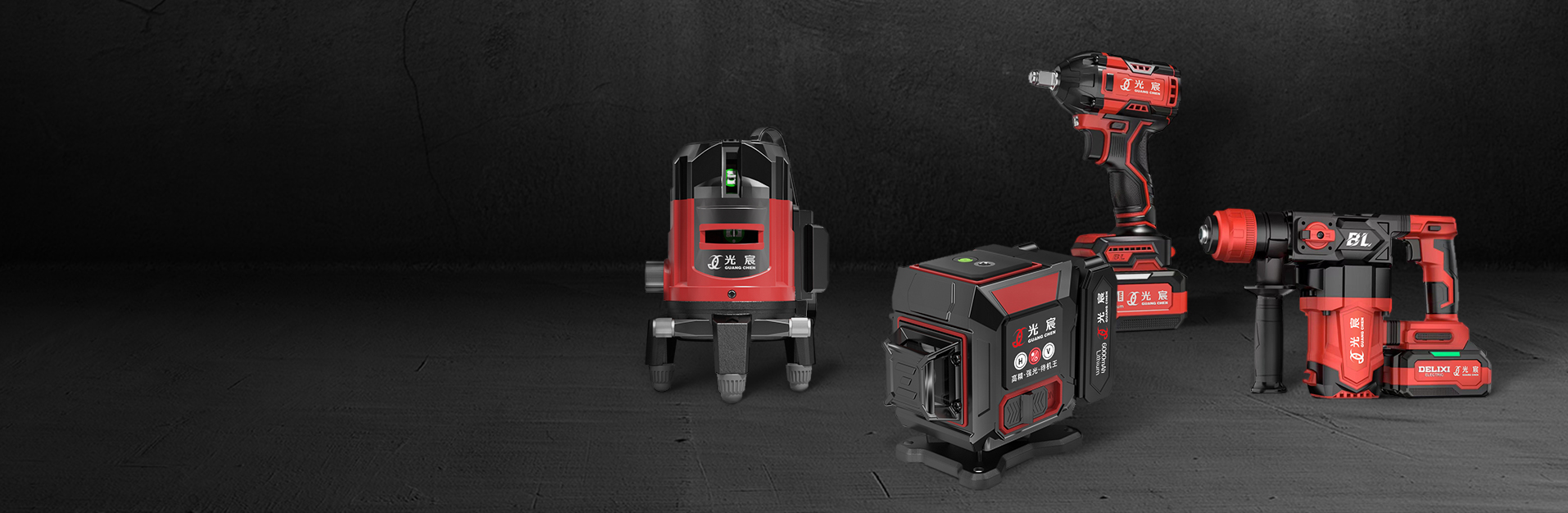
A laser level calibration service is a professional procedure that verifies and corrects the angular accuracy of a laser level instrument so that its projected beam is within the manufacturer's specified tolerance — typically ±1/16 inch per 30 feet (±1.5 mm per 10 m) or better. Without regular calibration, even a high-end laser level can drift outside acceptable accuracy limits due to mechanical shock, temperature cycling, and normal component wear — causing construction errors that compound invisibly across a project and can cost tens of thousands of dollars to correct. For contractors, surveyors, and facilities managers who rely on laser levels daily, scheduling a certified laser level calibration service is not optional maintenance — it is the foundation of measurement integrity.
Content
Laser level calibration is the process of comparing a laser level's output against a traceable reference standard, quantifying any deviation, and adjusting the instrument's internal optics or leveling mechanism until the beam meets its specified accuracy tolerance. Understanding why drift occurs helps clarify why calibration must be periodic rather than a one-time event.
Every laser level — whether a simple cross-line unit or a professional self-leveling rotary instrument — contains a precision-machined pendulum or electronic tilt sensor (MEMS accelerometer) that defines the instrument's horizontal and vertical reference planes. Over time, several mechanisms cause this reference to shift:
Industry data from calibration laboratories indicates that approximately 30–40% of laser levels submitted for calibration after 12 months of regular use are found to be outside their manufacturer's specified accuracy tolerance — a rate that climbs to over 60% for instruments that have experienced a documented drop or impact event.
A professional laser level calibration service follows a structured sequence of pre-inspection, accuracy verification against traceable reference standards, adjustment, post-adjustment verification, and documentation — a process that typically takes 1–3 hours per instrument depending on type and condition.
The technician inspects the instrument's physical condition: housing integrity, battery contacts, leveling vial condition, self-leveling mechanism function, and beam output quality. Instruments with cracked housings, compromised optical windows, or non-functioning self-leveling compensators are flagged for repair before calibration proceeds. A damaged compensator that has been bypassed or is intermittent cannot be calibrated to a reliable standard.
The instrument is placed on a stable calibration stand and allowed to thermally stabilize for a minimum of 15–30 minutes at the laboratory's controlled ambient temperature (typically 68 °F ± 2 °F / 20 °C ± 1 °C per ISO 17025 environmental requirements). A calibrated reference rod or optical comparator is positioned at the manufacturer's specified test distance — commonly 30 feet (10 m) and 100 feet (30 m) — and multiple readings are taken to establish the instrument's current error in all relevant planes (horizontal, vertical, and cross-line for multi-line instruments). For rotary laser levels, measurements are taken at a minimum of four cardinal points (0°, 90°, 180°, 270°) around the full sweep to detect wobble and eccentricity errors.
If the measured error exceeds the instrument's specification, the technician performs the appropriate adjustment. For self-leveling pendulum instruments, this typically involves adjusting the pendulum suspension point or the beam-splitting optics using micro-adjustment screws accessible through the instrument's calibration ports. For electronic (MEMS) instruments, calibration often involves updating the instrument's internal offset register via a manufacturer-supplied calibration software interface connected over USB or Bluetooth. Rotary laser levels may additionally require head wobble correction by adjusting the rotating head bearing preload.
After adjustment, the full measurement sequence is repeated to confirm the instrument now meets specification. A proper calibration service calculates and reports the expanded measurement uncertainty (U) of the calibration result — typically expressed at a 95% confidence level (coverage factor k=2). This uncertainty value tells the user how confident they can be that the reported calibration error is the true error, accounting for reference standard uncertainty, environmental variation, and repeatability. A calibration certificate without an uncertainty statement does not meet ISO/IEC 17025 requirements.
The calibration service issues a calibration certificate documenting: instrument identification (make, model, serial number), date of calibration, environmental conditions, pre-adjustment and post-adjustment readings, measurement uncertainty, reference standard used and its traceability to national standards (NIST in the U.S.; NPL in the UK; PTB in Germany), and the name and signature of the calibrating technician. This certificate is the legally defensible record that proves the instrument was within specification at the time of the work — critical for construction disputes, insurance claims, and regulatory audits.
The baseline recommendation for laser level calibration service is every 12 months for instruments in regular professional use — but high-impact environments, critical applications, and post-drop protocols justify more frequent intervals.
| Usage Scenario | Recommended Calibration Interval | Rationale |
| Light occasional use (DIY / home) | Every 2–3 years | Low shock exposure; infrequent thermal cycling |
| Regular professional use (construction) | Every 12 months | Industry standard; most manufacturer warranties require annual service |
| High-impact environments (demolition, heavy civil) | Every 6 months | Elevated shock and vibration accelerates drift |
| After any drop or impact event | Immediately before next use | Single impact can cause immediate out-of-tolerance condition |
| Critical precision work (survey, façade layout) | Every 6 months or per project | Tolerance requirements exceed standard construction margins |
| Rental fleet instruments | Every 6 months minimum | Multiple users, unknown handling history, high turnover |
Table 1: Recommended laser level calibration service intervals by usage intensity and application type.
Every category of laser level — from basic cross-line units to professional rotary and pipe lasers — requires periodic calibration service, but the complexity, cost, and frequency of calibration differ significantly by instrument type.
| Laser Level Type | Typical Accuracy Spec | Calibration Complexity | Avg. Service Cost (USD) |
| Cross-line (2-line) | ±3/32" at 30 ft | Low | $40–$80 |
| Multi-line (3–5 line) | ±1/16" at 30 ft | Moderate | $70–$130 |
| Rotary (single grade) | ±1/16" at 100 ft | Moderate–High | $100–$200 |
| Dual-grade rotary | ±1/16" at 100 ft (both axes) | High | $150–$300 |
| Pipe / drain laser | ±0.1% grade accuracy | High | $150–$350 |
Table 2: Laser level types, typical accuracy specifications, calibration complexity, and average professional calibration service cost ranges (U.S. market, 2025–2026).
The cost of skipping laser level calibration service is not the cost of the calibration itself — it is the cost of the construction errors that accumulate silently when an out-of-tolerance instrument is used for critical layout work.
Consider a concrete slab pour for a 10,000 sq ft commercial floor. If the laser level used to set the screed rails is out of tolerance by just 1/8 inch per 30 feet, the actual error at the far end of a 120-foot slab is 1/2 inch. A 1/2-inch floor flatness deviation in a commercial space typically fails ASTM F710 floor flatness requirements, requiring floor grinding or self-leveling compound correction. Remediation of a 10,000 sq ft floor to correct a 1/2-inch differential can cost $15,000–$40,000 — compared to a laser level calibration service cost of $100–$200.
Beyond direct rework costs, uncalibrated instruments create:
The most important criterion when selecting a laser level calibration service provider is ISO/IEC 17025 accreditation — the international standard that verifies a laboratory has the technical competence, equipment traceability, and quality management systems to produce valid calibration results.
Not all calibration services are equal. A vendor offering "in-house calibration" with no third-party accreditation may use uncalibrated reference equipment, undocumented procedures, and issue certificates that carry no legal or contractual weight. Here is what to verify before engaging a provider:
A field accuracy check — such as the bubble-and-wall method or the two-peg test — can detect gross errors in a laser level but cannot substitute for a professional laser level calibration service that provides traceability, uncertainty quantification, and a legally valid certificate.
| Attribute | Field Accuracy Check | Professional Calibration Service |
| Equipment Required | Tape measure, pencil, wall | Calibrated reference standard, controlled environment |
| Detects gross errors? | Yes | Yes |
| Detects subtle drift? | Often no | Yes — to ±0.001° resolution |
| Provides adjustment? | No | Yes |
| Traceable certificate? | No | Yes (ISO 17025 compliant) |
| Acceptable for contract compliance? | No | Yes |
| Typical Time | 5–10 minutes | 1–3 hours (plus transit for depot) |
Table 3: Comparison of field accuracy checks versus professional laser level calibration service across key capability, documentation, and compliance criteria.
The practical approach for most professional users is to perform a quick two-peg field check at the start of each project as a sanity check — and to send instruments for a full professional laser level calibration service on the annual (or more frequent) schedule appropriate for their usage intensity. The field check catches catastrophic failures; the professional service catches the subtle drift that causes the most insidious project errors.
Q: How do I know if my laser level needs calibration now?
A: The most reliable indicator is the two-peg test: set the laser at the midpoint between two stakes exactly 30 feet apart, mark the beam height on both stakes, then move the laser to within 5 feet of one stake and re-read both. If the height difference between the two readings exceeds the manufacturer's stated accuracy (typically ±1/16" to ±3/32" at 30 feet), calibration is needed. Additional warning signs include the self-leveling indicator light flashing or remaining lit during operation, a beam that appears to "drift" when the instrument warms up, and any visible physical damage to the housing or optical window.
Q: Can I calibrate my laser level myself?
A: Some laser levels allow minor user adjustment of the horizontal beam via accessible calibration screws — but this user adjustment is not the same as a professional laser level calibration service and does not produce a traceable calibration certificate. User adjustments are done without a calibrated reference standard, meaning you may be "correcting" the instrument based on a reference that itself is inaccurate. For any work where calibration documentation is required by contract, specification, or regulation, a certified professional calibration service is mandatory regardless of whether the instrument also supports user adjustment.
Q: Does a laser level calibration service cover repair as well?
A: Calibration and repair are separate services, though many providers offer both. Calibration verifies and adjusts accuracy within the instrument's existing mechanical and optical condition. If the pre-inspection reveals a failed compensator, damaged optics, or worn bearings, repair is required before calibration can proceed — and repair costs are additional. Always ask the provider to contact you with a repair estimate before proceeding if the instrument may be damaged. Repair costs for professional rotary laser levels can range from $80 to $400+ depending on the component requiring replacement.
Q: Is laser level calibration required by OSHA or building codes?
A: OSHA does not mandate laser level calibration directly, but calibrated instrumentation is implicitly required whenever specific dimensional tolerances are cited in construction specifications, building codes, or contract documents. For example, ADA slope requirements for accessible routes (maximum 1:20 grade), IBC structural steel plumb tolerances (L/500), and ASTM concrete floor flatness standards all implicitly require that the instruments used to verify compliance be calibrated. Many commercial construction specifications now explicitly require contractors to maintain calibration records for all layout and survey equipment — make this a standard practice regardless of whether it is contractually specified.
Q: How long does a laser level calibration certificate remain valid?
A: A laser level calibration certificate is technically valid for as long as the instrument remains within the conditions under which it was calibrated — but practically, most organizations treat calibration as expired after 12 months or upon any impact event, whichever comes first. The certificate itself does not have an intrinsic expiration date; rather, the organization using the instrument is responsible for establishing a calibration interval that ensures the instrument remains in tolerance throughout its use. For ISO 9001-certified construction firms and surveying companies, the calibration management system — including interval setting and certificate tracking — is itself subject to audit.
Q: What should I do with a laser level that cannot be brought back into tolerance?
A: If a laser level cannot be adjusted within its manufacturer's specified accuracy — typically because of worn optics, a damaged compensator beyond repair limits, or structural deformation from a severe impact — the calibration service should issue a "failed calibration" certificate documenting the as-found error and the determination that the instrument does not meet specification. This instrument must be removed from service immediately and clearly tagged as "out of service — do not use for layout." Continued use of a failed instrument is a liability risk and, in regulated environments, a compliance violation. The failed calibration certificate serves as documentation that the instrument was properly condemned rather than simply misplaced or discarded.
The return on investment for professional laser level calibration service is not subtle — it is measurable, direct, and consistently positive for any contractor or organization that depends on precise layout work.
At an average cost of $100–$200 per instrument per year, a laser level calibration service is one of the lowest-cost line items in a construction equipment budget — and one of the highest-leverage investments in error prevention. A single layout correction on a mid-size commercial project easily costs 100× the annual calibration cost of the instrument that caused it.
The professional standard is clear: schedule certified laser level calibration service annually for every instrument in regular use, immediately after any impact event, and before the start of any project with tight dimensional tolerances. Verify that your service provider holds ISO/IEC 17025 accreditation for laser level calibration, issues certificates with full traceability and uncertainty statements, and can support you with either depot or on-site mobile service depending on your operational needs.
In an industry where a fraction of an inch determines whether a project meets specification or requires costly remediation, a regularly calibrated laser level is not just good practice — it is the professional baseline that separates reliable contractors from those who spend their margins correcting preventable errors.
Copyright 2023 Jiangsu Guangchen Electronic Technology Co., Ltd. All Rights Reserved
China Lithium Power Tools Supplier