English
 русский
 Español
 عربى
Quick answer: A foundation laser level is a self-leveling laser tool that projects a horizontal reference plane—and often one or more vertical planes—for setting trench bottoms, footing formwork, slab heights, anchor bolts, and square corners. For most foundation crews, a 2-line or 3-line self-leveling unit with accuracy around ±1/8 in at 30 ft (±2 mm at 10 m), a receiver-ready beam, and a stable tripod mount is enough. Buy more lines only when you regularly lay out several walls or elevations at once.
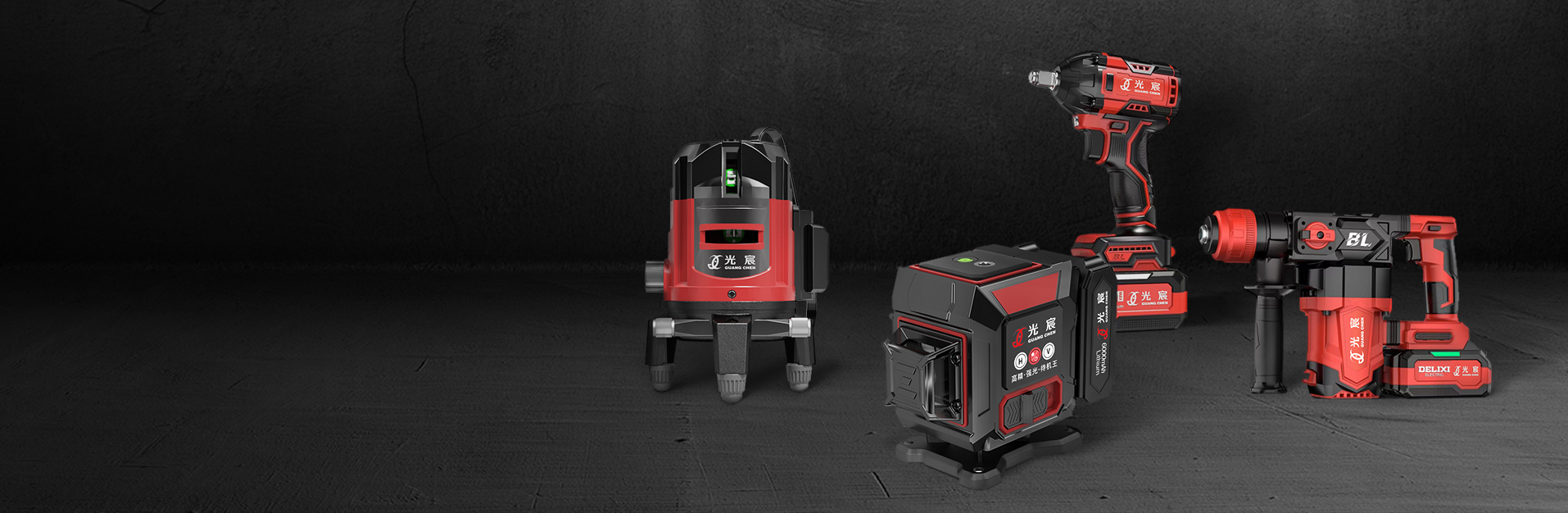
The tool does not replace a site datum; it transfers and repeats a reference faster than a spirit level across a trench or long form. The full laser level product range is organized by line count, but line count alone does not tell you whether the beam will be visible outdoors or whether the compensator will settle quickly on a busy site.
Content
What does a foundation laser level do on a real foundation job?
A foundation laser level sets a consistent horizontal and vertical reference for the work that decides whether the structure sits square and level. On a footing job, the crew uses it to mark trench bottom, top of form, anchor-bolt elevation, and a corner line up the wall. For a slab, it establishes finished floor height and drainage fall.
Common tasks include:
- Setting footing formwork to a fixed elevation above the benchmark.
- Checking trench bottom depth before gravel or concrete.
- Transferring a square corner or wall line.
- Marking anchor-bolt and embedded-plate heights.
- Checking slab edge and screed rail heights.
The laser is only as good as the reference point. If the benchmark is wrong, the beam repeats the error accurately. Check against a known elevation at the start of the day, especially after moving the tripod or transporting the unit.
Which accuracy and range figures actually matter?
Accuracy and working range matter more than line count, but read the figures in context. A common foundation specification is ±1/8 in at 30 ft, or about ±2 mm at 10 m. A tighter tolerance at 10 ft is useful for interior fit-out but not automatically better for a foundation where the beam must travel 40 ft or more.
Look at three numbers together: accuracy at a stated distance, self-leveling range, and receiver range. A self-leveling range of ±3° or ±4° is normal; if the tripod is far out of level, the unit will not settle. A receiver range of 100 ft or more is more useful outdoors than a bright line that disappears in sunlight. Laser class 2 is common, but the site still needs a glare and eye-exposure plan.
For a deeper explanation, see how laser level accuracy and stability are maintained. In short, the compensator must settle, the optics must stay clean, and the unit must be checked against a benchmark before critical pours.
Purchase risk: a low-price unit may list tight accuracy at 10 ft but give no receiver range, no IP rating, and no calibration path. On site, that often means a beam that is hard to see at 30 ft or a housing that fills with dust.
How many lines do you need for foundation work?
For most foundation work, two or three lines are enough; more lines help only when you repeatedly lay out multiple walls or elevations. A 2-line model gives one horizontal and one vertical plane. A 3-line model adds a second vertical plane at 90°, which is useful for square corners. More lines can clutter a trench and do not improve accuracy.
A 2-line unit is the simplest choice for form height, slab elevation, and a single wall line. It is light and quick to read, but you still need a tape or second reference for a 90° corner.
 2-Line Laser Level for Basic AlignmentCompact 2-line unit gives one horizontal and one vertical line for elevation and wall-line work, a simple first reference when no 90° corner is needed.View Product →
A 3-line unit is the practical foundation workhorse. The horizontal plane sets elevation, one vertical plane sets a wall line, and the second vertical plane gives a square reference.
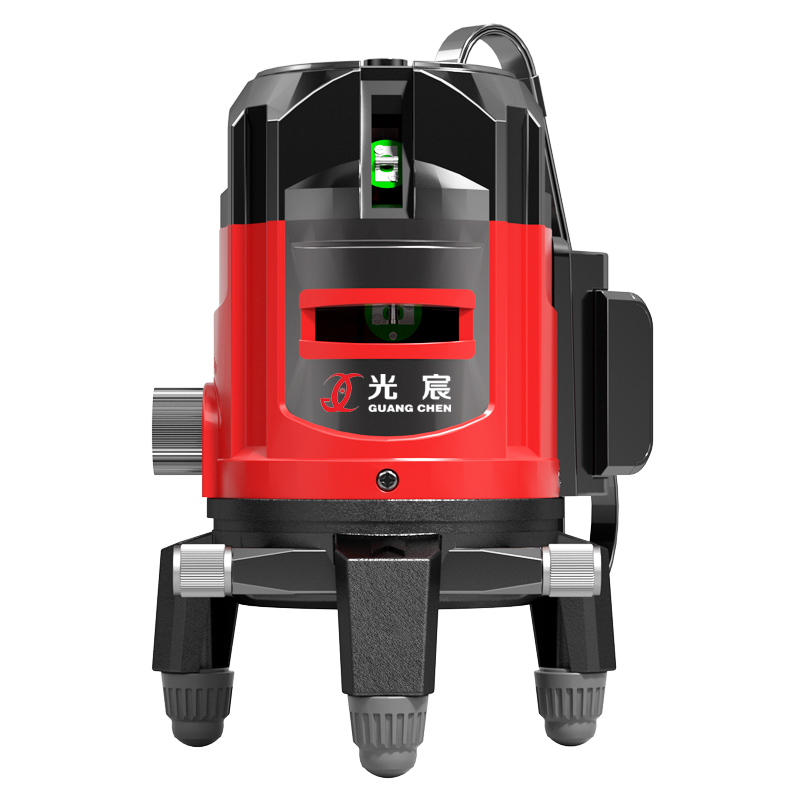 3-Line Laser Level for Square ReferenceAdds a second vertical line to horizontal and one vertical reference, giving a square setup for wall layout and routine leveling tasks.View Product →
An 8-line unit helps when several walls, columns, or openings are set from one setup. It reduces tripod moves, but the crew must label the active plane so the wrong line is not used.
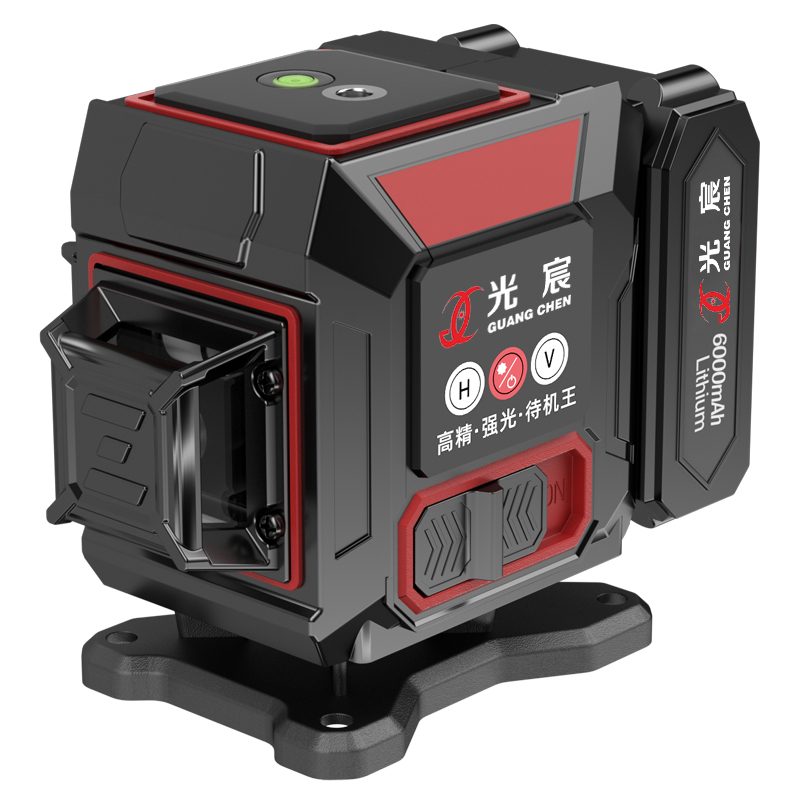 8-Line Laser Level for Multi-Plane LayoutEight-line unit supports multiple wall, column, and opening layouts from one setup, reducing tripod moves while requiring clear labeling of active planes.View Product →
| Line configuration | Typical foundation use | What to verify | Risk if over-specified |
|---|---|---|---|
| 2-line | Form height, slab edge, single wall line | Horizontal accuracy, receiver range, tripod mount | 90° corner work needs a separate square-up method |
| 3-line | Footing forms, square corners, anchor-bolt lines | Vertical plane alignment, self-leveling range, IP rating | Extra vertical line can be misread if not labeled |
| 5- to 8-line | Multiple walls, columns, openings from one setup | Line visibility, receiver compatibility, setup stability | Cluttered reference planes slow the crew |
| 12- to 16-line | Complex layout or repeated grid work | Calibration record, battery life, case protection | Cost and setup time rise faster than foundation accuracy |
What setup and site conditions change the result?
Setup quality changes the result more than a small difference in published accuracy. A laser on a light tripod beside a vibrating roller will move; a laser on stable ground, checked against a benchmark, will repeat the same plane all morning. Use a 1/4"-20 or 5/8"-11 mount that matches the unit and keep the legs away from traffic.
Outdoor conditions are the second factor. Direct sun can wash out a line at 20 ft to 30 ft, even within range. A receiver, a shaded sighting position, or a later start can solve this without buying a more expensive laser. For dust and rain, IP54 is a reasonable minimum, but no laser should be left in standing water or used with a cracked housing.
Temperature and stabilisation also matter. If a unit has been in a cold truck, let it reach ambient temperature before checking a benchmark. On a hot day, avoid direct sun because the housing can expand and the compensator can drift. These habits prevent a form that is level at 8 a.m. and 3/8 in out by lunch.
What should you check before buying?
Before buying, check the calibration path, receiver option, mounting thread, and battery system. A foundation laser level is a site tool, so serviceability matters as much as the beam. If the unit cannot be checked or recalibrated locally, a tight accuracy claim is less useful than a model that can be verified before every pour.
- Accuracy and distance: confirm the tolerance is stated at a useful distance, not only at 10 ft.
- Receiver compatibility: for outdoor work, a receiver often matters more than a brighter line.
- Self-leveling range: ±3° or ±4° is normal; a smaller range demands a more careful tripod setup.
- IP rating and housing: IP54 or better suits dusty, damp sites; check the case and lens cover.
- Mount and tripod: confirm 1/4"-20 or 5/8"-11 compatibility and budget for a stable tripod.
- Calibration and spares: ask how to verify the unit and whether batteries, chargers, and receivers are available.
Purchase risk is usually the support system, not the laser diode. A cheap unit with no receiver, a weak tripod, and no calibration check can cost more in rework than a mid-range unit with a clear verification routine.
FAQ
Is a foundation laser level the same as a rotary laser level?
No. A foundation laser level usually projects fixed lines for formwork and wall layout, while a rotary laser projects a rotating plane for longer-range grading and elevation work. A line laser is often faster for trenches and forms; a rotary with a receiver is better for wide-site cut and fill.
Can I use a foundation laser level outdoors?
Yes, but use a receiver and manage sunlight. The line may be visible at 20 ft to 30 ft in shade, but a receiver extends usable range and gives a clearer signal on a bright site.
What accuracy do I need for foundation work?
±1/8 in at 30 ft (±2 mm at 10 m) is a practical target for most footing and formwork tasks. Tighter tolerance is useful only when the project specification or the next trade demands it.
Do I need a tripod for a foundation laser level?
Yes, for repeatable foundation work. A stable tripod keeps the reference plane consistent and reduces the chance that the unit moves when equipment passes nearby.
Can a 2-line laser handle foundation layout?
Yes, for single-plane elevation and one wall line. Add a 3-line model if square corners are part of the daily routine, because the second vertical plane saves a separate square-up step.
Final takeaway: choose a foundation laser level by accuracy at distance, receiver range, setup stability, and the line configuration you will actually use. A 2-line or 3-line self-leveling unit covers most foundation work; step up to more lines only when multiple walls or a repeated grid justify the extra setup and reading discipline.