English
 русский
 Español
 عربى
عربى
Content
- Best Laser Level 2025: The Bottom-Line Verdict
- How We Evaluated: Five Criteria That Decide a Good Laser Level
- Red vs Green Laser Beam: Which Color Is Right for You?
- Line Count and Beam Types: What Do 2, 3, 5, 8, 12, and 16 Lines Actually Do?
- Best Laser Level 2025 by Use Case
- Accuracy and Calibration: What Tolerances Are Acceptable?
- How to Use a Laser Level for Consistent, Reliable Measurements
- Frequently Asked Questions
- Final Thoughts: Which Laser Level Should You Buy in 2025?
Best Laser Level 2025: The Bottom-Line Verdict
The best laser level to buy in 2025 is a 5-line green self-leveling model. It projects one horizontal line, two vertical lines, and two plumb points, which covers the vast majority of layout, framing, and fixture installation tasks on a jobsite or in a home workshop. A green beam is roughly four times more visible than red under the same lighting, and self-leveling cuts setup time to less than a minute.
If your work is limited to hanging pictures, shelves, and trim, a cheaper 2-line or 3-line green laser is the smarter buy. If you lay out entire rooms, partition walls, or drop ceilings, a 12-line or 16-line unit with full 360° planes saves hours. Our verdict is based on hands-on comparison against objective criteria, not on brand names or marketing claims.
How We Evaluated: Five Criteria That Decide a Good Laser Level
Five criteria decide whether a laser level earns a recommendation: accuracy, beam visibility, self-leveling range, battery endurance, and durability. We weighed these heavily because they have the largest impact on the quality of your finished work.
| Criterion | What to look for | Why it matters |
|---|---|---|
| Accuracy | ±1/8 in at 30 ft (±0.3 mm/m) or better | Errors multiply over long runs; a small angular error becomes a gap of several inches across a room |
| Beam visibility | Green, 520–532 nm | Green stays visible in daylight and across large rooms; red fades quickly |
| Self-leveling range | ±3° or more | Compensates for uneven floors and tripods and shows a warning outside its range |
| Battery life | 4–8 h continuous per charge | Prevents mid-project downtime, especially on full-room layouts |
| Durability | IP54 or higher, rubber overmold | Dust and drops are the main reasons a laser loses calibration |
We also checked mounting and tripod compatibility, but the five criteria above separate a frustrating tool from one you can trust on a deadline.
Red vs Green Laser Beam: Which Color Is Right for You?
Choose green unless you always work indoors at close range and want the lowest possible price. Green is 3 to 4 times more visible to the human eye, so you can work in daylight and over longer distances without a receiver.
| Factor | Red | Green |
|---|---|---|
| Visibility | Clear to about 30 ft indoors; hard to see in daylight | Visible well past 60 ft, usable in most daylight conditions |
| Battery draw | Lower, longer runtime per charge | Higher, shorter runtime |
| Price premium | Base price | Usually 30–50% more than an equivalent red unit |
| Best use | Close indoor work, budget kits | Large rooms, bright rooms, outdoor layout with a detector |
For 2025 buyers, green is the sensible default for professionals and serious DIYers. The extra battery draw is easy to manage with a quality lithium pack and a spare cell.
Line Count and Beam Types: What Do 2, 3, 5, 8, 12, and 16 Lines Actually Do?
More lines mean more simultaneous reference planes, not better accuracy. Match the line count to the complexity of your layout work.
- 2-line: one horizontal and one vertical cross-line. Enough for hanging pictures, shelving, and basic cabinet alignment.
- 3-line: horizontal plus two verticals at 90°, so you can square corners and set door frames and tile reference lines.
- 5-line: horizontal, two verticals, and two plumb dots. Transfers points from floor to ceiling and is the best all-round professional configuration.
- 8-line: adds full 360° coverage in one or more planes, keeping reference lines on adjacent walls without rotating the unit.
- 12-line: three full 360° planes (one horizontal and two vertical), the practical ceiling for most indoor construction layouts.
- 16-line: four 360° planes that simultaneously reference the floor, ceiling, and walls on complex commercial installations.
If you are not sure which line count you need, a 5-line model is the safest starting point; it covers more situations than 2- or 3-line units without the cost jump of 12-line machines.
Best Laser Level 2025 by Use Case
The table below summarizes our recommendations, and the picks that follow explain why each configuration fits its intended work.
| Use case | Configuration | Why it works |
|---|---|---|
| Budget home layout and picture hanging | 2-line or 3-line green | Fast setup, low cost, covers walls and corners |
| General contracting and cabinetry | 5-line green self-leveling | Plumb transfers and complete wall reference in one setup |
| Full-room layout, partitions, ceilings | 8-line or 12-line multi-plane | Simultaneous coverage on all walls reduces repositioning |
| Complex commercial installation | 16-line full multi-plane | Floor, ceiling, and wall references at the same time |
Best Budget DIY Pick: 3-Line Green Laser Level
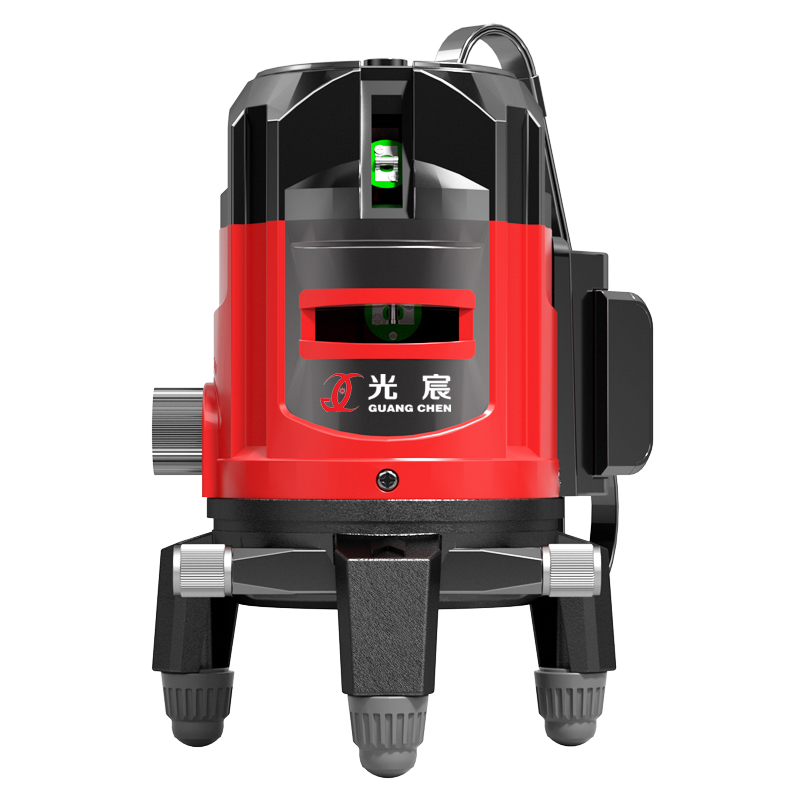 3-Line Laser Level with Horizontal and Two Vertical LinesA practical budget-friendly option for homeowners and part-time renovators. It projects one horizontal and two vertical lines plus enhancement points, helping with cabinets, tile lines, and squaring interior walls without the cost of a 5-line unit.View Product →
A 3-line green unit is the sweet spot for a homeowner or part-time renovator. It solves roughly 80% of household layout tasks—hanging kitchen cabinets, setting tile lines, squaring interior walls—for far less than the cost of a 5-line machine. The second vertical line lets you set 90° corners without rotating and releveling the tool, which is where most budget lasers waste your time.
Best Overall for Professionals: 5-Line Self-Leveling Laser Level
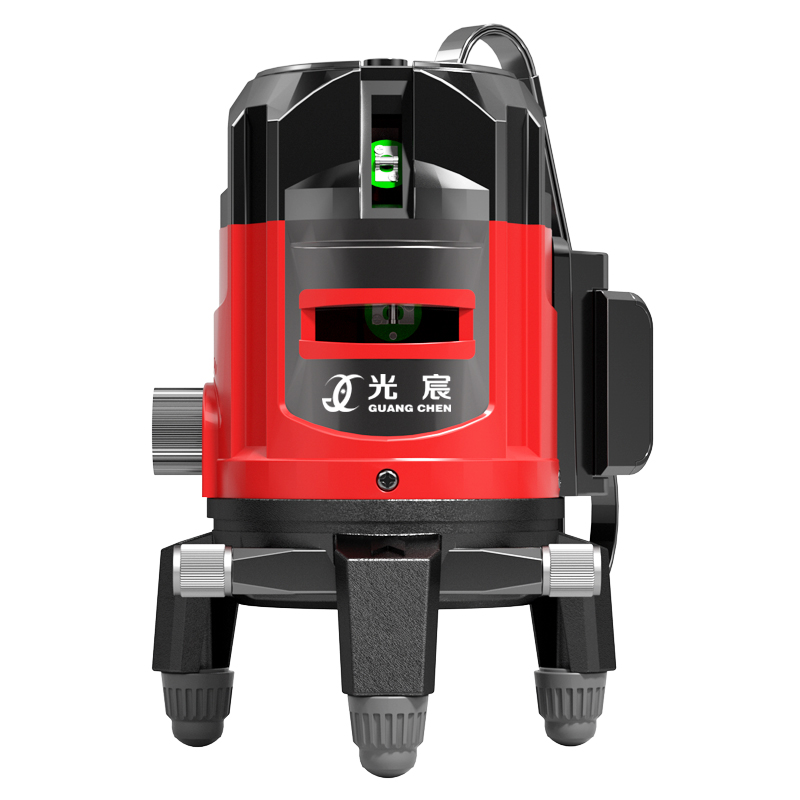 5-Line Laser Level with Plumb Points for Floor-to-Ceiling TransferRecommended as best overall for trades. It adds two plumb points and two vertical lines to a horizontal line, enabling fast square layouts, corner alignment, and continuous floor-to-ceiling transfer—ideal for cabinets, railings, or ductwork.View Product →
The 5-line model is our best overall because it adds two plumb points for floor-to-ceiling transfer. A contractor installing cabinets, railings, or ductwork can set the unit once, shoot the horizontal line, and transfer plumb up to the ceiling, which is exactly the workflow most trades need every day. The combination of horizontal, two verticals, and plumb dots also makes square layouts and corner-to-corner alignment much faster than with a spirit level or a 2-line laser.
Best for Full-Room Layout: 12-Line Laser Level
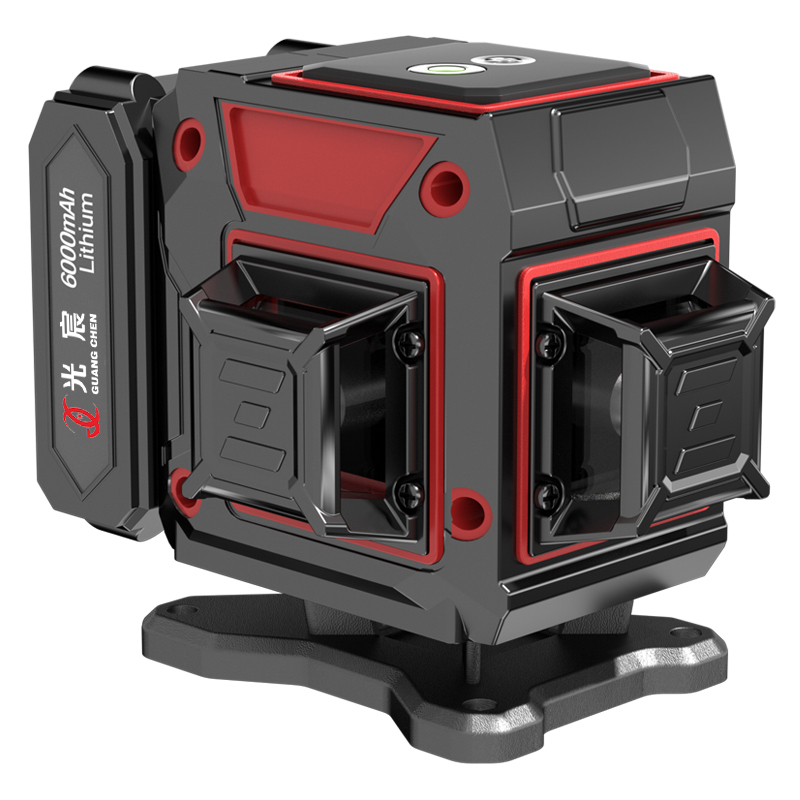 12-Line Laser Level with Four Horizontal and Eight Vertical PlanesDesigned for large-scale jobs like drop ceilings, partition walls, and extensive tile patterns. Emits three full 360° planes, covering all four walls and two vertical mid-room planes, minimizing setup time and reorientation during big layouts.View Product →
For drop ceilings, partition walls, large tile patterns, and electrical or plumbing runs, a 12-line unit emits three full 360° planes. You get a level line around all four walls plus two vertical planes through the middle of the room, so you can work continuously without rotating the instrument. This configuration pays for itself on the first large layout job because it removes the most setup time.
Accuracy and Calibration: What Tolerances Are Acceptable?
A quality self-leveling laser level holds ±1/8 in at 30 ft (±0.3 mm/m), and the best units we tested achieve ±1/9 in at 33 ft. That tolerance is sufficient for framing, cabinets, and trim. You still need to verify calibration periodically, especially after transport or a drop.
Modern self-leveling lasers use a pendulum mechanism that aligns the beam to gravity. You can learn how that mechanism maintains its accuracy and stability in our detailed technical explainer.
- Wall test: project a horizontal line, mark both ends, and compare with a tape measure; the difference should be within the stated tolerance.
- Rotation test: level the unit against a reference mark, rotate it 180°, and confirm the line does not drift more than 1/8 in over 30 ft.
- Recalibration: if either test fails, return the unit for professional calibration; do not try to repair the pendulum yourself.
How to Use a Laser Level for Consistent, Reliable Measurements
Most laser level errors come from three mistakes: placing the tool on an unstable surface, not letting the self-leveling pendulum settle, and working beyond the specified range. Avoid these and the projected lines will match the spec sheet.
Read our step-by-step guide on how to use a laser level correctly to keep measurement accuracy and speed high on every job, including tips for tripod setup and beam visibility.
Frequently Asked Questions
Here are the questions buyers ask most often when comparing laser levels.
Is a green laser level worth the extra cost?
Yes for most buyers. Green beams are 3 to 4 times more visible, which reduces setup time and errors. If you only work indoors under controlled lighting at short range, a red unit will save money without a big loss in performance.
What is the difference between a laser level and a laser distance measurer?
A laser level projects reference lines or dots for alignment and layout; a distance measurer reads numeric distances. The two complement each other, but the self-leveling laser level is the tool that keeps lines square and level over a whole project.
Can laser levels be used outdoors?
Yes, with limitations. Direct sunlight washes out any laser beam beyond 30–60 ft, so use a green beam model and add a laser receiver/detector to extend the working range outdoors.
Do laser levels need frequent calibration?
No. A quality unit holds calibration for years unless it is dropped. Run the wall and rotation tests before critical work, and send the unit for calibration only if one of those tests fails.
Final Thoughts: Which Laser Level Should You Buy in 2025?
Buy a 5-line green self-leveling laser level if you want one tool that handles most jobs. Choose a 3-line model for budget-friendly home use, and step up to a 12-line unit when you regularly lay out complete rooms. Verify that the accuracy spec is ±1/8 in at 30 ft or better, confirm the self-leveling range covers at least ±3°, and check that battery life covers a full workday.
With those boxes ticked, a certified laser level pays for itself within the first project, and the 2025 generation of green self-leveling units is the most capable yet for both professionals and DIYers.